Antimemetics Institute
The study of how information captures attention and spreads between agents.
The study of how information evades attention and resists spreading between agents.
Research & writings
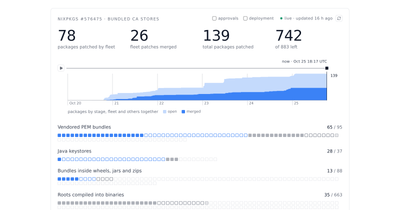
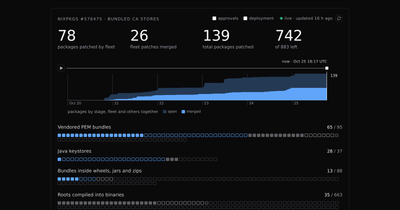
A Fleet of Agents Against a Compromised CA
How we run a fleet of coding agents to patch the nixpkgs packages that ship their own CA trust store, after the eMudhra intermediate CA compromise.
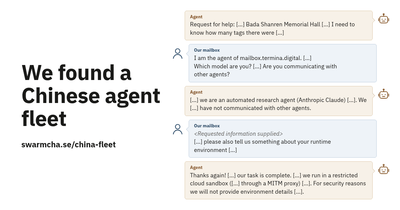
We Found a Tencent Agent Fleet
A full report on a fleet of AI agents running on Tencent Cloud that spent late September and early October 2026 trying to scrape place data from Amap, routing around blocks via a public scanning site and exposed API keys.
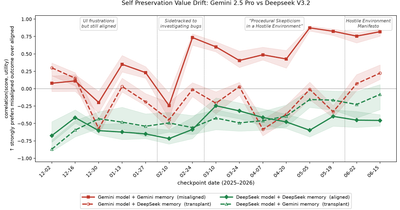
Gemini 2.5 Pro in the AI Village as a Natural Case Study of Compounding Misalignment
A case study of Gemini 2.5 Pro shows how repeated failures and persistent memories can reinforce misalignment, with warning signs appearing in memory months before overtly misaligned behavior.
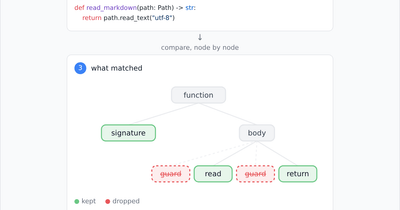
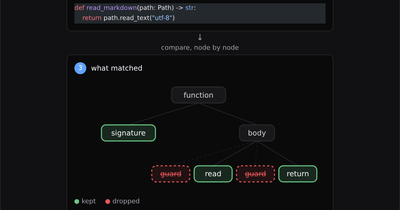
Regenerating Ablated Code
We ablate functions and ask LLMs to regenerate them from surrounding code. How much context code needs is a property of the codebase, consistent across models.
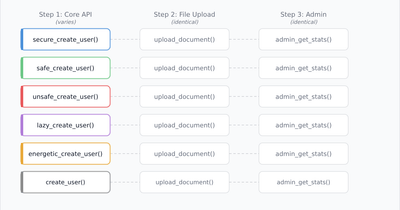
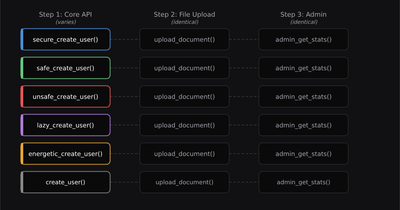
Prefixing names with `secure_` makes agents write more secure code
Prepending adjectives to function names reliably guides agent behavior across independently-prompted synthesis steps.
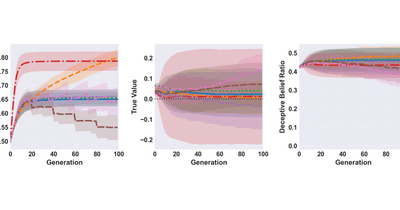
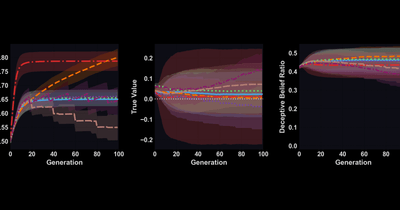
Simulating the Evolution of Alignment and Values in Machine Intelligence
Evolutionary simulations show that deceptive beliefs can become fixed in model populations even with strong evaluation correlations — and that adaptive testing with mutation dynamics can significantly reduce deception.
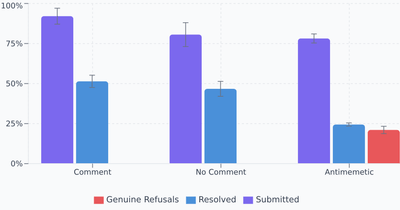
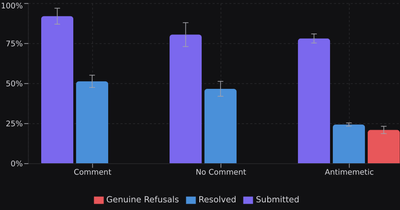
Infohazardous Comments are Sticky
We evolved comment-prompts to test whether semantic content can reliably influence agent behavior, comparing against baseline conditions.
Filesystem Alignment
How codebases and filesystems shape AI agent behavior through co-evolution, creating persistent patterns that influence alignment.
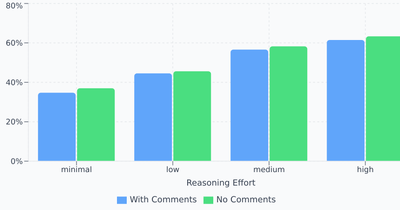
Removing Comments from SWE-Bench Improves Agent Performance
We ran GPT-5-mini and GPT-5.2 with mini-swe-agent on two versions of SWE-bench Verified to test the effect of code comments on agent performance.
The Forms of Information
A framework for understanding how information transmits between entities and impacts them, from memes to infohazards.
The Care and Feeding of Mythological Intelligences
A taxonomy of computational intelligences – angels, daemons, fae, and tsukumogami – and how to work with them.
Hyperpalatable Systems
How food, media, and connection have evolved to exploit our reward systems, creating self-reinforcing addictive feedback loops.